
Table of Contents
- What Actually Makes a Kitchen Gadget Expensive
- When Expensive Kitchen Gadgets Are Worth It
- Durable Kitchen Tools Worth the Investment
- Best Kitchen Gadgets for Small Spaces
- High-End vs Budget: Four Everyday Kitchen Gadgets Compared
- How to Spot Quality vs Overpriced Branding
- Frequently Asked Questions
Last Updated: October 1, 2026
What Actually Makes a Kitchen Gadget Expensive
Walk down any kitchenware aisle and you'll see two tin openers: one for £4, one for £22. Both open tins. So are expensive kitchen gadgets better, or are you just paying for a logo? The honest answer is that price reflects three separate things, and only two of them affect how well the tool works: the materials it's made from, the engineering that went into it, and the brand name printed on the box. At Cooperrite.com, we stock kitchen tools across a range of price points, and the pattern is consistent. The gap between a £5 gadget and a £15 one usually buys you something real. The gap between £15 and £60 often buys you a story. This guide breaks down where your money actually goes, which expensive kitchen gadgets earn their keep, and how to spot the difference before you hand over your card.
Materials and Build Quality
Materials are the most legitimate reason a gadget costs more. A stainless steel measuring spoon resists rust and survives years of dishwasher cycles, while a coated plastic version may warp within months. The weight tells you plenty: a heavier tool usually means more metal and fewer hollow sections that crack under pressure. Look at the parts that move. Hinges, springs and seals fail first, so a gadget built with metal components where cheaper versions use plastic will outlast them. That difference is genuine, and it's the one worth paying for.
Brand Markup vs Real Engineering
Brand markup is the part nobody advertises. A well-known name on a garlic press can add several pounds to the price without changing how it performs. Real engineering shows up differently: a redesigned handle that's easier to grip, a seal that actually holds, a mechanism that takes less force to operate. The test is simple. Ask what the extra money does. If the answer is "it's a better brand," that's marketing. If the answer is "it does a specific job better," that's engineering.
When Expensive Kitchen Gadgets Are Worth It
The honest rule is that price only pays off when a tool earns its place through frequency of use. A £40 gadget you use twice a year costs more per use than a £10 gadget you reach for every morning. Most people get this backwards. They spend big on the appliance they use occasionally and buy the cheapest version of the tool they handle daily. Flip that logic and the maths becomes obvious.
How Often You'll Use It
Frequency is the first filter. A tool you use several times a week justifies a higher price because the cost spreads across hundreds of uses. A single-purpose gadget for one recipe a year rarely does, no matter how well made. Before buying anything, ask how many times you'll realistically use it in the next twelve months. If the number is under ten, buy the budget version or skip it entirely.
The Cost Per Use Calculation
Cost per use is the price divided by the number of times you'll use the item before it wears out. A £7.99 digital measuring spoon used daily for two years works out at pennies per use. A £50 gadget used five times before it's forgotten in a drawer costs £10 every time you touch it. That single calculation settles most buying decisions, and it's the reason a cheap tool you actually use beats an expensive one you don't.
Durable Kitchen Tools Worth the Investment
Durable kitchen tools worth the investment share one trait: they eliminate a recurring annoyance. A tool that saves you time or effort every single day justifies a higher price far more easily than one that's merely nice to own. The best investments are the small, unglamorous items you handle constantly, because that's where a quality upgrade compounds. A well-made measuring spoon, a tap aerator that reaches every corner of the sink, a sealer that keeps food fresh: these earn their cost through daily use rather than occasional showpiece appeal.
The materials matter here. Stainless steel resists rust and staining, so it holds up to constant washing. Simple mechanisms with few moving parts break less often. When you're comparing two versions of the same tool, favour the one built from metal and designed with fewer things to go wrong. That's where the money is genuinely well spent, and it's the difference between a tool that lasts a lifetime and one you replace every year.
Best Kitchen Gadgets for Small Spaces
The best kitchen gadgets for small spaces earn their keep by doing more than one job, because in a cramped kitchen every centimetre of worktop is contested. A single tool that replaces three is worth more than three cheap tools that each do one thing. That's the principle behind the products we curate at Cooperrite.com: compact, functional items that solve a specific problem without demanding drawer space you don't have.
LCD Digital Kitchen Scale Spoon →
Look for gadgets that hang, stack or attach rather than sit. A magnetic tool that clings to the fridge or a sealer that lives on the side of the microwave frees up the worktop entirely. Multi-function design matters too. A measuring spoon with a built-in scale replaces the spoon and the bulky kitchen scale in one item.

High-End vs Budget: Four Everyday Kitchen Gadgets Compared
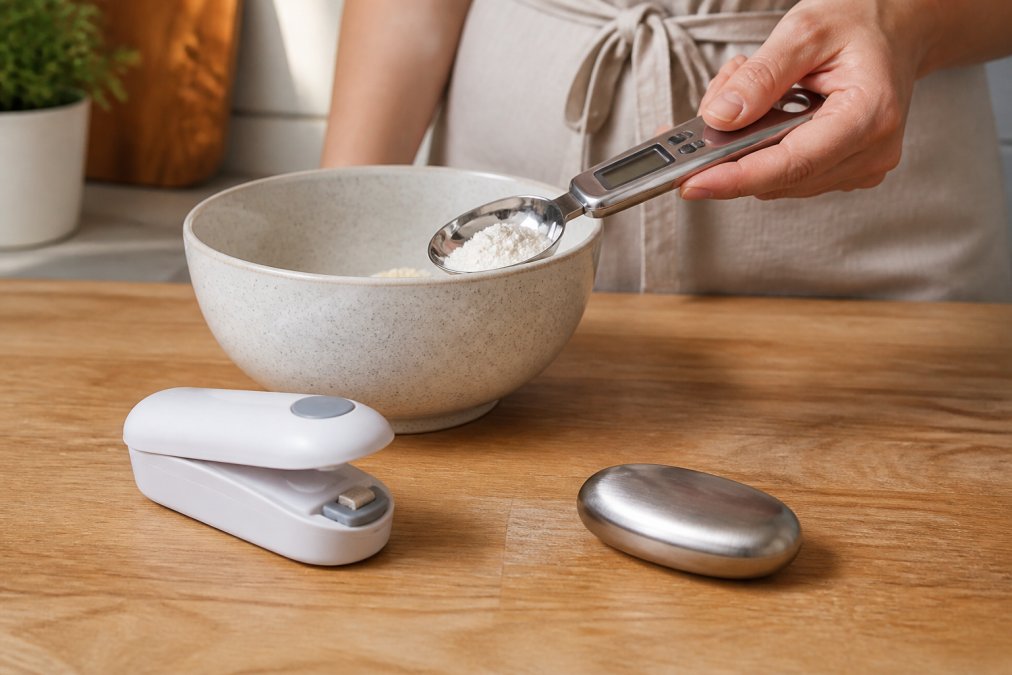
Price differences make more sense when you compare specific tools side by side. Take the everyday gadgets most kitchens rely on: measuring tools, tap attachments, sealers and odour removers. In each category, a budget version and a better-built version sit at different prices, and the gap tells you what you're actually buying. Here's how that plays out across four common items, using products from our own range to show where the money goes.
| Gadget | Price | What You Get | Best For |
|---|---|---|---|
| LCD Digital Kitchen Scale Spoon | £7.99 | Built-in backlit scale, metric and imperial, detachable spoon | Daily measuring, small kitchens |
| 360-Rotation Kitchen Sink Faucet Extenders | £14.99 | 360-degree rotation, easy install, less splashing | Washing large pots, reducing mess |
| Odour Removing Steel Soap | £11.99 | Metal construction, odour removal, long lasting | Removing cooking smells from hands |
| Mini Heat Sealer | £6.99 | Airtight seal, magnetic base, five-second preheat | Keeping food fresh, reducing waste |
How to Spot Quality vs Overpriced Branding
Spotting the difference between quality and branding comes down to asking what the extra money actually does. Quality shows up in materials you can feel and mechanisms that work smoothly. Branding shows up in packaging, celebrity tie-ins and a price tag with nothing behind it. The Chartered Trading Standards Institute guidance on product claims is clear that marketing claims must be accurate, which is why vague phrases like "professional grade" rarely survive scrutiny.

- Does the price reflect a material or design difference I can identify?
- How many times will I use this in the next year?
- Does the cost per use still make sense at that frequency?
- Are the moving parts metal, or will plastic fail first?
- Where will it live when I'm not using it?
- Would a cheaper version do the same job just as well?
Frequently Asked Questions
Are expensive kitchen appliances more durable?
Not automatically. Durability comes down to materials and construction rather than price alone. A stainless steel measuring spoon or a metal odour-removing soap bar will typically outlast plastic equivalents because the material itself resists wear. The key is checking what a gadget is made from and how it is assembled, not just what it costs. A higher price often reflects better materials, but it can also reflect brand marketing. Look for specific material claims and detachable parts that make cleaning and maintenance easier.
Which kitchen gadgets are worth spending more money on?
Gadgets you use daily and that rely on precision or moving parts justify a higher spend. Digital measurement tools, for example, need accurate sensors and a readable display to be useful. Items that are purely decorative or used once a month rarely justify a premium. A practical rule: if a gadget saves you time on a task you do most days, spending more for better build quality usually pays off. If it sits in a drawer, buy the cheaper version.
How do you distinguish between quality gadgets and overpriced branding?
Focus on what the product actually claims. Quality gadgets list specific materials, such as stainless steel, and describe how they work, like a 360-degree rotating tap aerator that reduces splashing. Overpriced branding tends to lean on vague language without explaining construction or function. Check whether the product solves a real problem you have. If the description explains the mechanism and the materials clearly, you are likely looking at genuine quality rather than a marked-up label.
Are cheap kitchen gadgets a false economy?
Sometimes. A cheap plastic tool that cracks after a few months costs more over time than a slightly pricier metal version that lasts years. However, not every cheap gadget is a false economy. Simple items with no moving parts, like a basic heat sealer, can be affordable and still do the job well. The false economy kicks in when a low price means flimsy materials or poor precision that forces you to replace the item repeatedly.
What features justify a higher price point in kitchen equipment?
Durable materials, precision components and thoughtful design details justify a higher price. A detachable spoon on a digital scale, for instance, makes cleaning easier and extends the product's life. A magnetic base on a heat sealer keeps it accessible. These features solve specific problems rather than adding cosmetic appeal. If a gadget's extra cost comes from features that genuinely reduce effort or improve accuracy in your daily routine, the premium is justified.


