
Last Updated: November 13, 2026
Quick Summary
Effective home storage depends on both efficiency and routine simplification: efficiency makes a single task faster with less effort, while simplification removes or redesigns the steps around it. Fix reach before speed, and fix repetition before reach, because most kitchens improve most from simplifying the layout first.
- Count how many items you must move to reach what you want; those are your daily efficiency losses.
- Place daily items at waist and eye level and push monthly items high or low.
- Organise zone by zone: empty one zone, group by task, place by frequency, then set the routine.
- Choose no-drill fittings if you rent or move within two years, accepting a lower weight limit.
- Time one routine for three days before and after a change to see if it works.
Table of Contents
- Efficiency vs Routine Simplification: What's the Difference?
- How Storage Solutions Make Household Tasks More Efficient
- Small Kitchen Storage Ideas That Simplify Daily Routines
- No-Drill Kitchen Storage Ideas for a Faster Workflow
- Renter-Friendly Kitchen Organisation Without Permanent Changes
- How to Organise a Kitchen for Efficiency: Step-by-Step
- Where Efficiency and Simplicity Overlap: A Decision Framework
- Choosing Your Home Storage Upgrades
- Frequently Asked Questions
Efficiency vs Routine Simplification: What's the Difference?
Efficiency in household tasks means getting a job done with less time, effort and movement, while routine simplification means cutting out or redesigning the steps around that job entirely. Efficiency squeezes a chore tighter, while simplification removes the friction that made it a chore. Effective home storage depends on both, and knowing which one a problem needs changes how you spend your money.
Efficiency is the speed and effort of a single task. A better-spaced cupboard shortens the time it takes to unload a dishwasher. Routine simplification is the shape of the day around that task: fewer trips, fewer decisions, fewer things to move out of the way first. One is a stopwatch question, the other a sequence question.
Most homes need both, but not equally. A cramped kitchen with no worktop space needs simplification first, because no amount of speed helps if every pan has to be lifted off three others. A well-planned kitchen with a clumsy sink setup needs efficiency first. The table below sets out the difference in plain terms.
| Question | Efficiency | Routine simplification |
|---|---|---|
| What it targets | Speed and effort of one task | Number and order of steps |
| Typical fix | Better tools, better reach | Fewer trips, fewer decisions |
| Best for | Repeated, well-defined jobs | Cluttered, chaotic sequences |
| Cost pattern | One-off purchase | Mostly layout and habits |
| Risk if overdone | Gadgets that save seconds | Systems nobody follows |
How Storage Solutions Make Household Tasks More Efficient
Storage makes household tasks more efficient by cutting the distance between you and the thing you need. When a pan, cloth or container sits where you use it, the task loses its search time.
The practical test is reach. Walk your kitchen and count how many items you have to move before you can grab what you actually want. Those are your efficiency losses, and they repeat every single day.
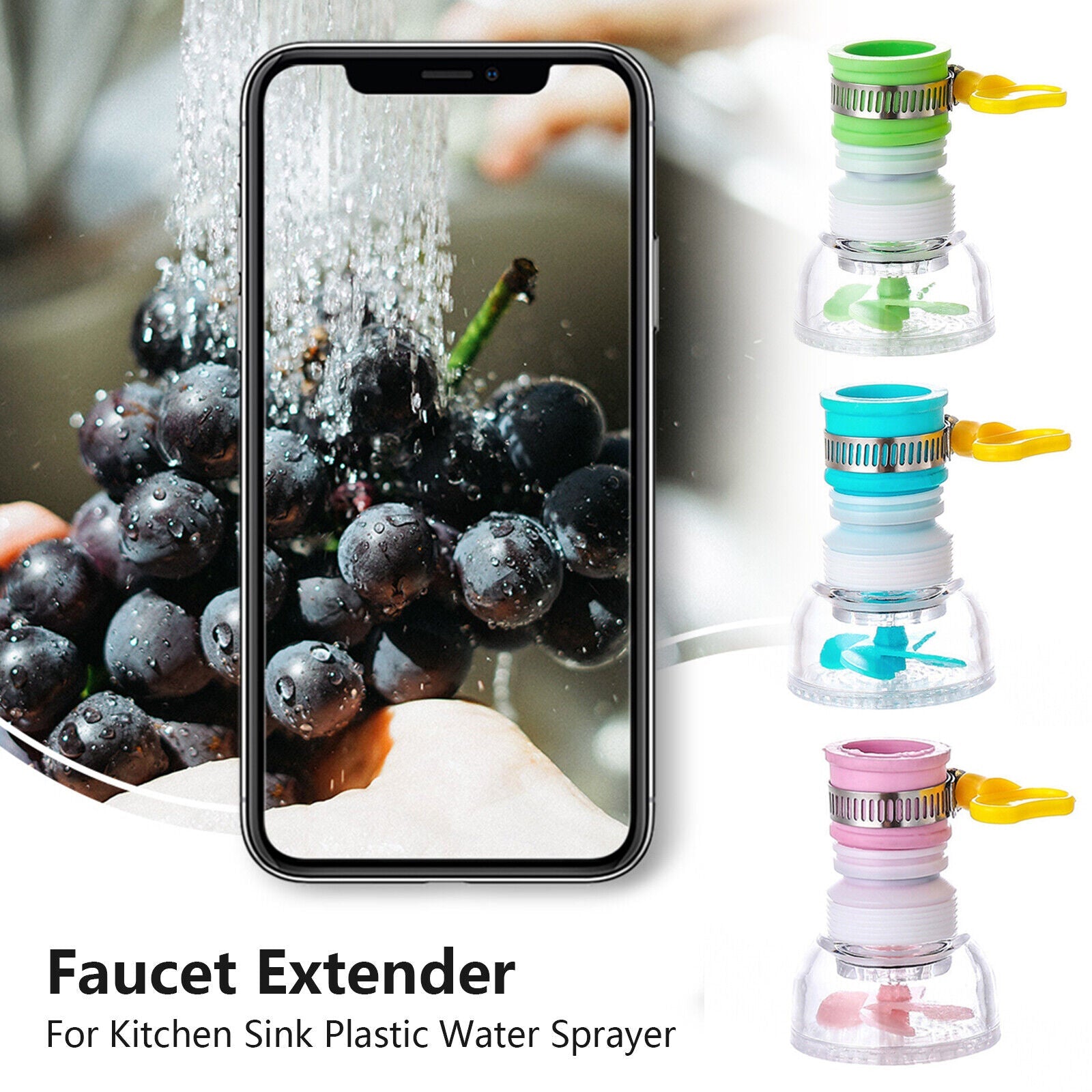
A flexible kitchen tap attachment such as our 360-Rotation Kitchen Sink Faucet Extenders at £14.99 reduces splashing and makes it easier to rinse large pots. The practical advice is to fix the reach before you buy more containers.
Watch out: buying storage before measuring your actual shelf depth is a common mistake. Deep containers swallow the back of a cupboard and hide items you then forget you own.
Small Kitchen Storage Ideas That Simplify Daily Routines
Small kitchen storage works best when it simplifies the routine rather than adding to it. If you want a fuller walkthrough, our guide on how to organise tiny kitchen counters sets out seven practical steps.
Start with what you touch daily: kettle, mugs, chopping board, one pan, one cloth. Everything else moves up, down or out.
Then remove one repeated trip. If you carry items from a cupboard to the sink and back every day, a single tray or caddy that moves as one unit kills that trip permanently.
To make the advice actionable, compare storage options by household need rather than by product type. The table below sets out the trade-offs for four common situations.
| Household need | Best storage approach | Setup effort | Ongoing upkeep | Typical cost band (GBP) |
|---|---|---|---|---|
| Small flat or bedsit | Vertical stackable risers, over-door racks, tension poles | Low, no tools | Wipe monthly; check tension | £15-£40 |
| Family with young children | Low-level open bins, labelled containers, child-safe latches | Medium, some fixing | Weekly reset; relabel as needs change | £25-£60 |
| Renter in a shared house | Free-standing shelves, caddies, adhesive hooks | Low, removable | Re-stick hooks every few months | £10-£35 |
| Older adult or limited mobility | Waist-height pull-out drawers, turntables, reach extenders | Medium, may need help | Annual check of fixings | £30-£80 |
Typical cost band (GBP)
These bands are indicative and vary with retailer and specification, but they show the pattern: the cheapest options are usually the most removable, and the most durable need some fixing.
Watch out: buying a storage set before measuring your shelf depth and door swing is a common mistake. Deep containers swallow the back of a cupboard and hide items you then forget you own.
If you want to measure whether a change is working, pick one routine, the evening clean-up, for example, and time it for three days before and after. That consistency is what makes a routine simpler rather than just faster.
No-Drill Kitchen Storage Ideas for a Faster Workflow
No-drill storage speeds up a kitchen because it installs in minutes and can move when your routine changes.
A rotating tap extender reaches the corners of the basin and rinses large pots without you wrestling the pot under a fixed spout.
For the rest of the room, keep the rule simple: anything used weekly should be visible, anything used monthly can hide. Adhesive hooks above the worktop hold utensils and cloths; an over-door rack handles foil, wrap and boards.
Use the decision framework below to choose between no-drill and fixed storage before you buy.
- If you rent or move within two years, choose no-drill and accept a lower weight limit.
- If you store heavy pans or appliances, fix to a stud or use a free-standing shelf instead of adhesive.
- If the wall is tiled or painted, test an adhesive strip for 24 hours with the intended load before trusting it.
- If the fitting needs daily adjustment, it will fail sooner; choose a tension pole over a hook for anything moved often.
- If you need the storage to last more than five years, plan for a fixed shelf and get landlord permission in writing.
A common pattern is that no-drill setups fail at the point of maximum load, a rack full of tins, a hook holding a heavy pan, rather than gradually. Check the manufacturer's weight rating and halve it for safety.
Watch out: a no-drill system that needs constant re-sticking is worse than a fixed shelf, because the failure happens when the shelf is full. If you find yourself re-pressing hooks weekly, switch to a free-standing unit rather than adding more adhesive.
Renter-Friendly Kitchen Organisation Without Permanent Changes
Renter-friendly organisation avoids permanent fixtures, so the test is simple: can you take it with you and leave the wall untouched? Free-standing shelves, tension poles, stackable risers and over-cabinet racks all pass. Screws, tile adhesive and cut-to-size fittings generally do not.
The practical approach is to build the system in layers. Start with what sits on the worktop, then the inside of cupboards, then the walls. Each layer can be removed in a minute. That matters at the end of a tenancy and it also matters when you realise a layout is not working.
If you want more ideas that avoid fixing anything to the fabric of the building, our collection of tiny kitchen space saving hacks covers the options in more detail. The best renter setups are the ones you can dismantle in an afternoon.
How to Organise a Kitchen for Efficiency: Step-by-Step
Organising a kitchen for efficiency follows a fixed sequence: empty one zone, group by use, place by frequency, then set a routine that keeps it that way. Doing it zone by zone takes an evening or two and avoids the overwhelm of emptying the whole room at once.
- Empty one zone. Clear a single cupboard or drawer completely and wipe it out.
- Group by task, not by type. Keep the pan, lid and spoon for one dish together.
- Place by frequency. Daily items at waist and eye level; monthly items high or low.
- Measure before you buy. Check shelf depth and height before any insert or container.
- Set the routine. Decide where each item returns after use, and stick to it for a week.
- Review after seven days. Move anything that has drifted back to a bad spot.
The routine step is the one most people skip, and it is the one that decides whether the work lasts. A simple daily plan is enough. Our guide on how to maintain a tidy kitchen covers what to do each day so the system holds without a weekly reset.
Where Efficiency and Simplicity Overlap: A Decision Framework
Efficiency and simplification overlap when a single change removes a step and shortens the task at the same time. The framework below helps you decide which to fix first, based on what your kitchen is actually doing wrong.
Use this sequence:
- If you move items to reach other items, simplify the layout first.
- If the layout is sound but the task is slow, improve the tool.
- If you repeat the same trip daily, combine it into one unit.
- If a gadget needs setting up each time, it will end up in a drawer. Skip it.
- If the change needs a drill and you rent, choose the no-drill version.
A useful rule of thumb: fix reach before speed, and fix repetition before reach. Most kitchens improve most from the first two lines of that list, and the expensive purchases come last.
Choosing Your Home Storage Upgrades
Choosing home storage upgrades comes down to three checks: does it fit the space you measured, does it remove a step you actually repeat, and can you install it without damage? If a product fails any of the three, it will not earn its place.
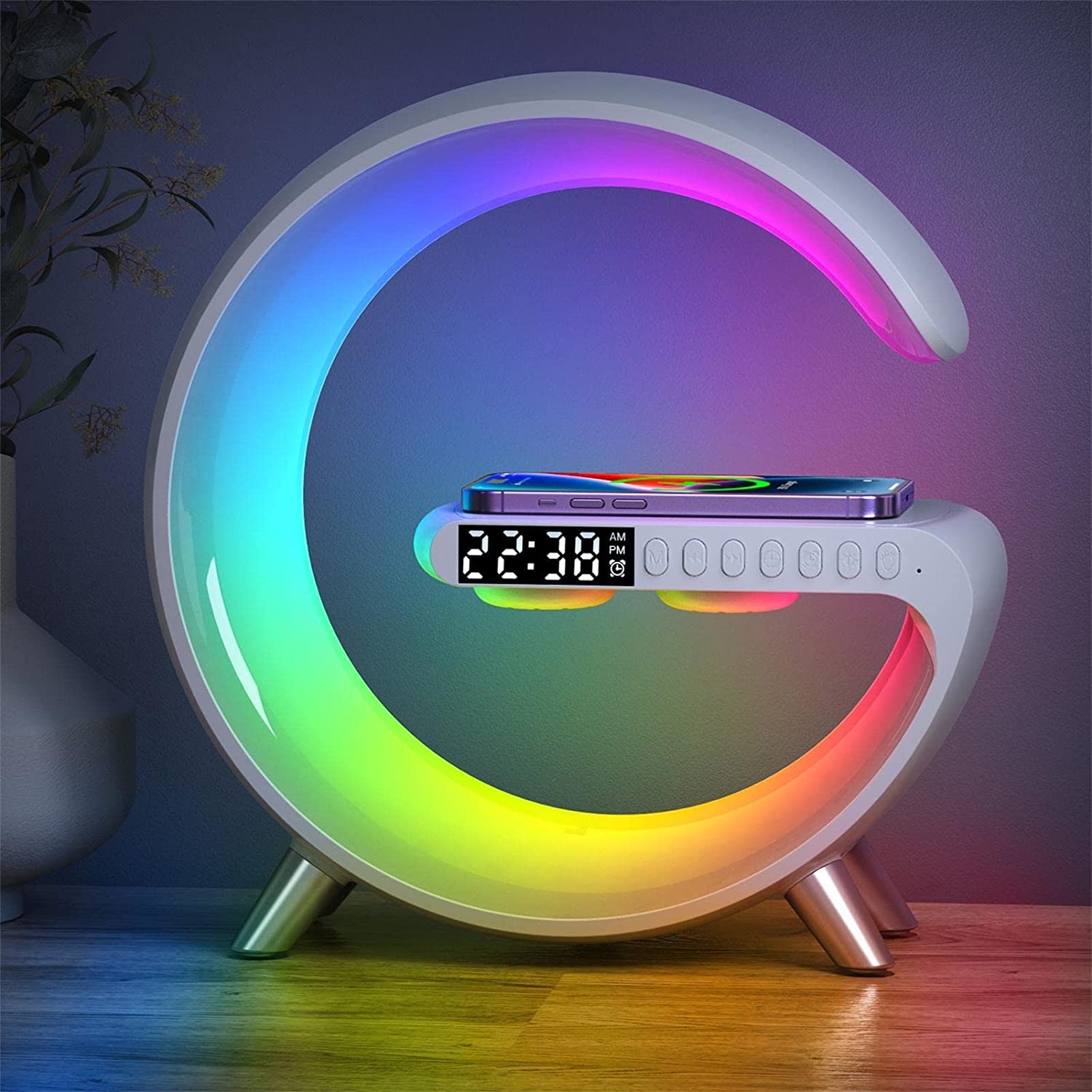
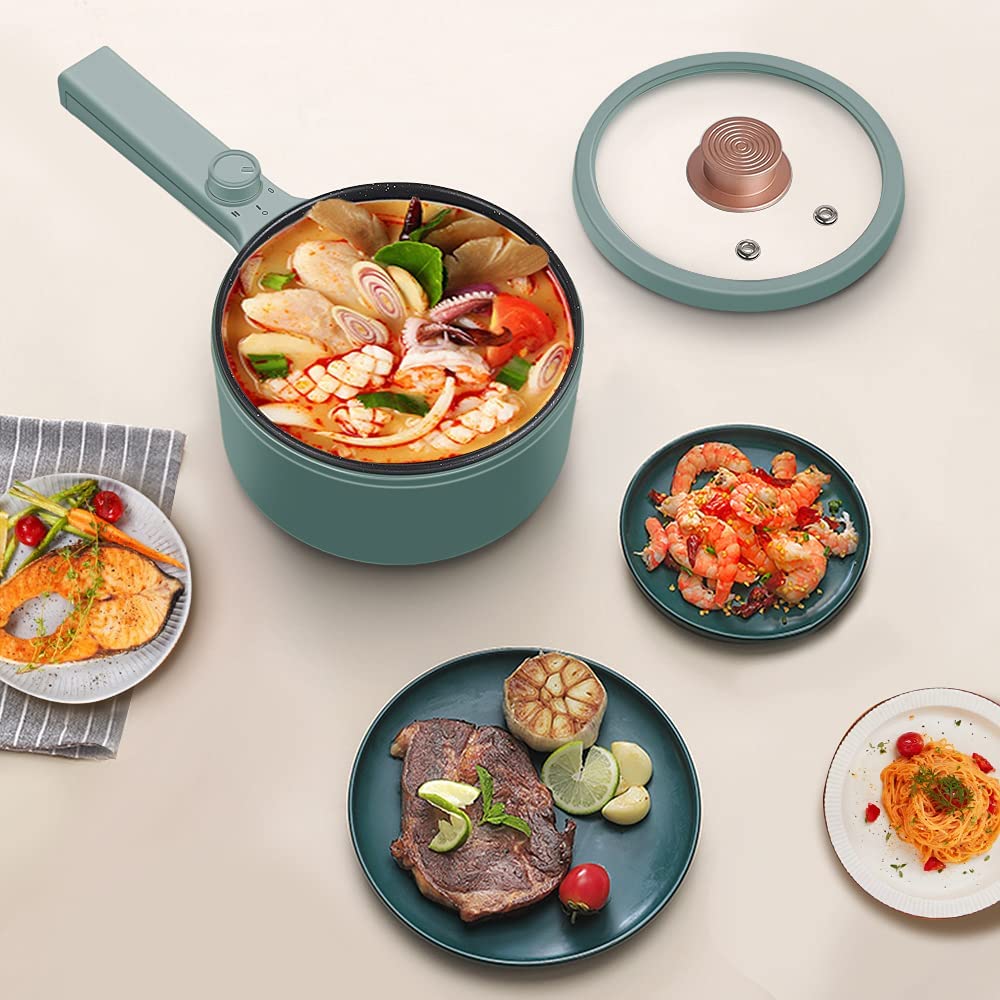
A compact appliance can simplify a routine as much as a shelf can. The Heated Portable Pot at £44.99 heats food using its built-in element, with a rotary knob and a small body that is easy to move and store. The Charger Lamp at £59.99 combines a light, an alarm and a 15W charger on one deck.
Before spending on any storage tool, read our honest verdict on whether smart kitchen tools are worth it. It sets out where the money is well spent and where it is not.
Watch out: a storage system that needs constant maintenance is worse than none. If an insert has to be lifted out to reach the shelf behind it, it is costing you time, not saving it.
Most kitchens do not need a refit; they need the reach fixed, one repeated trip removed and a routine that survives a tired Tuesday. That is the work Cooperrite is built for: practical household gadgets that simplify daily routines rather than adding to them.
Frequently Asked Questions
How can storage solutions make household tasks more efficient?
Good storage cuts the time spent searching, moving and putting things back. When every item has a fixed, accessible spot, you stop re-handling the same objects. A 360-degree tap extender (£14.99) speeds up washing larger pots, while a compact heated pot (£44.99) reduces the number of pans you need to store. The efficiency gain comes from fewer steps per task, not from buying more containers.
What is the difference between improving efficiency and simplifying routines?
Improving efficiency means doing the same task faster with less wasted motion, such as storing frequently used items within easy reach. Simplifying routines means removing steps altogether, such as keeping one multi-use tool instead of three single-purpose ones. The two work best together: a simplified routine with efficient storage removes both the extra steps and the time each step takes.
What are the best small kitchen storage ideas?
Focus on vertical space and multi-use items. Wall-mounted racks, stackable containers and over-door hooks add capacity without floor space. A charger lamp (£59.99) combines a light, an alarm and a 15W charger in one unit. A compact heated pot (£44.99) stores easily between uses. Measure your gaps first, then choose storage that fits them exactly rather than buying generic sets.
How can renters add kitchen storage without drilling?
Use tension rods, adhesive hooks, freestanding shelving and over-cabinet racks, all of which remove cleanly at the end of a tenancy. A 360-rotation tap extender (£14.99) needs no fixing and improves sink access immediately. Check your tenancy agreement before using strong adhesives on painted surfaces, and test any hook on a small hidden area first.


