
Table of Contents
- Start With a Kitchen Declutter: What to Keep and What to Move
- Vertical Kitchen Storage Solutions for Dead Wall Space
- How to Organise Kitchen Cupboards for Maximum Capacity
- The Best Kitchen Organisers for Small Spaces: 5 Clever Picks
- Mistakes That Sabotage Your Space Saving Efforts
- Make Your Tiny Kitchen Feel Bigger With Simple Layout Changes
- Conclusion: Your Action Plan for a More Spacious Kitchen
- Frequently Asked Questions
Last Updated: September 5, 2026
Living with a tiny kitchen often feels like a constant game of Tetris where you never quite have the right piece. The challenge isn't the lack of space itself, but how effectively you use every available inch. At Cooperrite.com, we offer a range of practical tiny kitchen space saving hacks that can transform cramped cooking areas into efficient, workable zones. Below, we'll show you exactly how to reclaim your worktops and cupboards with actionable steps you can implement this weekend.
The core principle behind most successful space saving hacks is simple: think vertically, declutter ruthlessly, and make every item earn its place. Most guides focus on buying more gadgets, but the real win comes from changing your approach to storage and organisation first. We'll walk through a logical sequence, starting with the hardest step (decluttering) and finishing with layout tweaks that make the room feel larger.
Start With a Kitchen Declutter: What to Keep and What to Move
Before you buy a single storage basket, you need to clear the decks. A kitchen declutter is the foundation of every successful space saving hack; without it, you're just organising clutter into neater piles.
Begin by emptying your cupboards and drawers completely. Group items into three categories: daily use, occasional use, and never use. Daily use items like your kettle, toaster, and favourite frying pan stay on the counter or in easy-reach cupboards. Occasional items, such as a slow cooker or cake tins, should move to higher shelves or a utility cupboard. Anything you haven't touched in a year should be donated or sold.
A common mistake is keeping duplicate tools (goodhousekeeping.com). Do you really need three spatulas or two measuring jugs? Keep one of each and free up the drawer space. Similarly, move rarely used appliances like breadmakers and juicers out of the kitchen entirely if you have a garage or hall cupboard. This single step often reclaims more space than any organisational product you can buy.
Vertical Kitchen Storage Solutions for Dead Wall Space
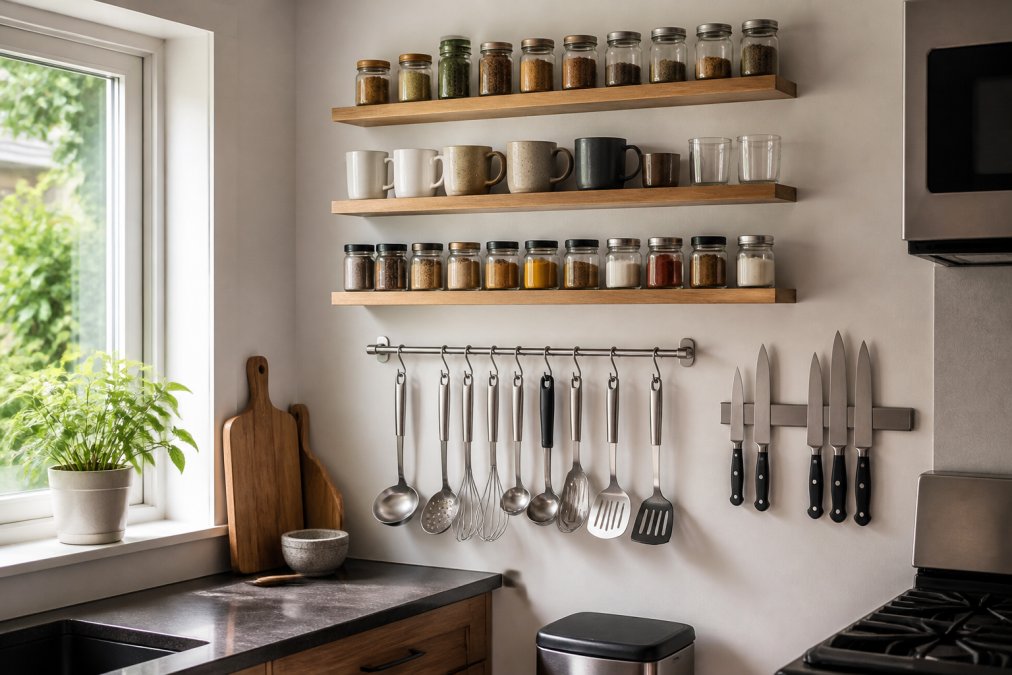
The most underused real estate in any small kitchen is the wall space between the worktop and the wall cupboards. Vertical kitchen storage solutions turn this dead zone into prime storage, keeping essential tools visible and within arm's reach.
Start by installing a magnetic knife strip on the wall or splashback. This removes a bulky knife block from your counter and looks sleek. Next, mount a rail with S-hooks to hang utensils, ladles, and mugs. For spices and small jars, floating shelves are a game-changer; they use shallow depth but offer significant vertical capacity.
When installing shelves, measure the depth carefully. You don't want them protruding so far that they make the room feel cramped. A depth of 15-20 cm is usually enough for spice jars and small bowls (thespruce.com). Hang frequently used items at eye level and reserve the highest shelves for items you rarely touch. This approach keeps the space feeling open while adding substantial storage.
How to Organise Kitchen Cupboards for Maximum Capacity
Most cupboards are underfilled because items are stacked haphazardly. Learning how to organise kitchen cupboards properly can effectively double your storage capacity without changing a single cabinet.
The secret is to use every inch of vertical space inside the cupboard. Stackable shelf risers create a second level for plates and bowls, letting you use the full height of the cabinet (realsimple.com). For food storage containers, ditch the lids and store them separately in a file organiser; stack the containers inside each other to save significant space.
Drawer organisers are equally important for cutlery and utensils. Instead of letting items shift around, use adjustable dividers to keep everything in its place. For cupboard doors, install slim wire racks to hold cleaning supplies, foil, or cling film. These often-wasted door surfaces provide valuable storage for flat items that otherwise clutter your drawers.
The Best Kitchen Organisers for Small Spaces: 5 Clever Picks
Once your cupboards are simplified, the right organisers make daily life easier. Here are five of the best kitchen organisers for small spaces that deliver real results without taking up valuable room.
1. Under-shelf baskets clip onto existing wire shelves, instantly creating a second storage level for mugs or small packets. They cost little and require no installation.
2. Corner cupboard carousels (lazy Susans) make deep corner cabinets accessible, preventing the black hole where items disappear for months.
3. Tension rod organisers fit inside cupboards to divide vertical space, perfect for stacking chopping boards or baking trays on their side.
4. Over-the-door racks turn the back of a pantry or cupboard door into useful storage for spices, tins, or cleaning products.
5. Collapsible storage bins provide flexible organisation on open shelves and can be folded flat when not needed, which is ideal for tight spaces.
| Organiser | Best For | Space Saved | Installation |
|---|---|---|---|
| Under-shelf basket | Mugs, small packets | Creates second shelf level | Clip-on, no tools |
| Lazy Susan | Corner cupboards | Full access to deep corners | Drop-in |
| Tension rod | Baking trays, boards | Divides cupboard vertically | No drilling |
| Over-door rack | Spices, tins | Uses unused door space | Hook over door |
| Collapsible bin | Open shelf storage | Folds flat when empty | None |
These picks focus on versatility and minimal footprint, making them some of the most effective space saving hacks for renters and homeowners alike.
Mistakes That Sabotage Your Space Saving Efforts
Even with the best intentions, several common mistakes undermine otherwise solid space saving hacks. Recognising these pitfalls saves you time, money, and frustration.
The first mistake is buying storage products before decluttering. You end up organising items you should have removed, wasting money on containers for things you don't need. The second is ignoring vertical space entirely, leaving the area above cupboards and below cabinets unused. A third error is overfilling shelves; cramming items in so tightly that you can't see what you have, leading to duplicate purchases.
Another frequent issue is choosing form over function. A beautiful glass jar set looks lovely but may not stack efficiently or fit your cupboard dimensions. Always measure your cupboards before buying any organiser, and check that the product's dimensions match your available space. Finally, don't forget about the space under the sink; a tiered caddy can transform this awkward area into useful storage for cleaning supplies.
Make Your Tiny Kitchen Feel Bigger With Simple Layout Changes
Storage is only half the battle; how the room feels matters just as much. Several simple layout changes can make a tiny kitchen feel significantly more spacious and pleasant to work in.
Lighting plays a crucial role. Under-cabinet LED strip lights eliminate dark shadows on your worktop, making the space feel larger and more functional. If you have a window, keep the sill clear to maximise natural light. Mirrors are an unexpected but effective trick; a small mirror on a splashback reflects light and visually doubles the room's depth.
Colour choice also affects perception. Light, neutral tones on walls and cabinets reflect light, while dark colours absorb it and make a room feel smaller. If you can't repaint, swap dark accessories for lighter ones. Finally, keep worktops as clear as possible. A clutter-free surface instantly makes the room feel more open, reinforcing the benefits of your decluttering work.
Conclusion: Your Action Plan for a More Spacious Kitchen
A spacious-feeling kitchen isn't about square footage; it's about smart organisation and disciplined habits. Start with a full declutter, then implement vertical storage, organise cupboards with risers and dividers, and finish with lighting and layout tweaks that open up the room.
Getting the right tools makes this process far easier. At Cooperrite.com, we curate practical household gadgets designed to simplify daily routines and improve efficiency. From flexible tap attachments that make cleaning easier to smart storage solutions that maximise every inch, our range supports a more organised, enjoyable home environment.
The challenge of a small kitchen is real, but it's solvable. Add a few targeted organisers to your space this week and feel the difference. Get started with Cooperrite.com and reclaim your kitchen.
=== FAQ ANSWERS (ARTICLE CONTENT, AUDIT EACH ONE SEPARATELY, SAME RULES) ===
[1] Q: How do I declutter a small kitchen effectively? A: Start by emptying every cupboard and drawer. Sort items into keep, relocate, and donate piles. Be strict: if you haven't used an appliance or tool in the last year, move it out. Duplicates, like multiple spatulas or mixing bowls, are prime candidates for removal. After decluttering, measure your remaining items and cupboard space before buying any organisers. This prevents you from purchasing storage products that don't fit or simply add to the clutter. A clear worktop is the goal.
[2] Q: What are the best vertical kitchen storage solutions? A: The best vertical kitchen storage solutions use your wall space and the inside of cupboard doors. Consider mounting a magnetic knife strip to free up drawer space, installing a rail with S-hooks for utensils and mugs, and adding slim spice racks to the inside of cupboard doors. For pans, a wall-mounted pot rack keeps heavy items accessible without taking up cupboard space. These ideas keep essentials within reach and clear valuable worktop and cupboard areas.
[3] Q: How do I store pots and pans in a small kitchen without a rack? A: If you lack wall space for a rack, use a sturdy, expandable pan organiser inside a base cupboard. This lets you store pots and pans vertically, so they stack neatly instead of nesting messily. Place lids in a separate vertical lid holder on the cupboard door or beside the pans. This approach uses the full height of the cupboard and stops you from pulling out a different pan to reach the one you need.
[4] Q: What are the best kitchen organisers for small spaces? A: The best kitchen organisers for small spaces are those that maximise vertical space and fit your specific cupboards. Look for expandable shelf risers to double your cupboard shelf space, under-shelf baskets for extra storage, and slim pull-out drawers for narrow gaps. Door-mounted spice racks and over-sink drying racks are also effective. Choose organisers with a simple design that are easy to clean and match the dimensions of your existing storage.
Frequently Asked Questions
How do I declutter a small kitchen effectively?
Start by emptying every cupboard and drawer. Sort items into keep, relocate, and donate piles. Be strict: if you haven't used an appliance or tool in the last year, move it out. Duplicates, like multiple spatulas or mixing bowls, are prime candidates for removal. After decluttering, measure your remaining items and cupboard space before buying any organisers. This prevents you from purchasing storage products that don't fit or simply add to the clutter. A clear worktop is the goal.
What are the best vertical kitchen storage solutions?
The best vertical kitchen storage solutions use your wall space and the inside of cupboard doors. Consider mounting a magnetic knife strip to free up drawer space, installing a rail with S-hooks for utensils and mugs, and adding slim spice racks to the inside of cupboard doors. For pans, a wall-mounted pot rack keeps heavy items accessible without taking up cupboard space. These ideas keep essentials within reach and clear valuable worktop and cupboard areas.
How do I store pots and pans in a small kitchen without a rack?
If you lack wall space for a rack, use a sturdy, expandable pan organiser inside a base cupboard. This lets you store pots and pans vertically, so they stack neatly instead of nesting messily. Place lids in a separate vertical lid holder on the cupboard door or beside the pans. This approach uses the full height of the cupboard and stops you from pulling out a different pan to reach the one you need.
What are the best kitchen organisers for small spaces?
The best kitchen organisers for small spaces are those that maximise vertical space and fit your specific cupboards. Look for expandable shelf risers to double your cupboard shelf space, under-shelf baskets for extra storage, and slim pull-out drawers for narrow gaps. Door-mounted spice racks and over-sink drying racks are also effective. Choose organisers with a simple design that are easy to clean and match the dimensions of your existing storage.


