
Table of Contents
- Why Managing Pet Hair Needs a Strategy, Not Just a Vacuum
- The Core Toolkit: What You Need for Effective Tools for Managing Pet Hair
- Best Pet Hair Remover for Sofa: Manual Tools That Beat the Vacuum
- How to Remove Dog Hair from Carpet: Step-by-Step Methods
- Choosing the Right Vacuum for Pet Hair on Floors and Upholstery
- Pet Hair Prevention Tips: Stop the Problem Before It Starts
- Conclusion: Your Monthly Routine for Managing Pet Hair
- Frequently Asked Questions
Last Updated: September 9, 2026
Why Managing Pet Hair Needs a Strategy, Not Just a Vacuum
Pet hair management is the process of controlling shedding across your home using a combination of cleaning tools, grooming habits, and prevention tactics. Most households make one critical error: they rely on a single vacuum to solve everything. Pet hair embeds itself differently into carpets, sofa fibres, and clothing, and a one-size-fits-all approach leaves the worst offenders untouched.
The difference between a home that looks clean and one that genuinely is clean often comes down to matching the right tool to each surface. A vacuum excels on hard floors, but it struggles to lift hair woven deep into upholstery weave.
The good news is that you do not need a cupboard full of expensive machines. A focused kit of three or four tools, used correctly, keeps every surface manageable. Below, we break down the essential toolkit, the best manual removers for sofas, and a step-by-step method for carpets, plus the prevention habits that cut your cleaning workload dramatically.
The Core Toolkit: What You Need for Effective Tools for Managing Pet Hair
Effective tools for managing pet hair fall into three categories: powered cleaners for floors, manual removers for fabric, and grooming aids that stop hair at the source. You need at least one from each category to keep on top of shedding.
For floors, a vacuum with a tangle-free brush roll matters more than raw suction. Hair wraps around standard brush bars, which kills performance within weeks. Models such as the Dyson V15 Detect use anti-tangle technology and laser illumination to reveal hidden dust, while the Bissell Pet Hair Eraser offers a dedicated upright option with a SmartSeal system for trapping dander.
Manual tools fill the gaps a vacuum cannot reach. Upholstery, car seats, and pet bedding need reusable rollers or scrapers rather than sticky tape refills. Grooming gloves remove loose fur directly from your pet, which is the most efficient point of intervention.
| Tool Category | Primary Use | Example Tools | Frequency |
|---|---|---|---|
| Powered vacuum | Floors, large rugs | Dyson V15, Bissell Pet Hair Eraser | 2-3 times weekly |
| Manual remover | Sofas, bedding, car interiors | Uproot Cleaner Pro, Ace 2 Ace roller | Daily touch-ups |
| Grooming aid | On the pet, reducing shed | Salhap grooming glove | 2-3 times weekly |
Best Pet Hair Remover for Sofa: Manual Tools That Beat the Vacuum
The best pet hair remover for sofa fabrics is a reusable manual roller, not your vacuum. Vacuum heads press hair deeper into woven upholstery, and the suction alone rarely lifts the embedded undercoat. A manual tool with a textured surface physically grabs and pulls the hair out.
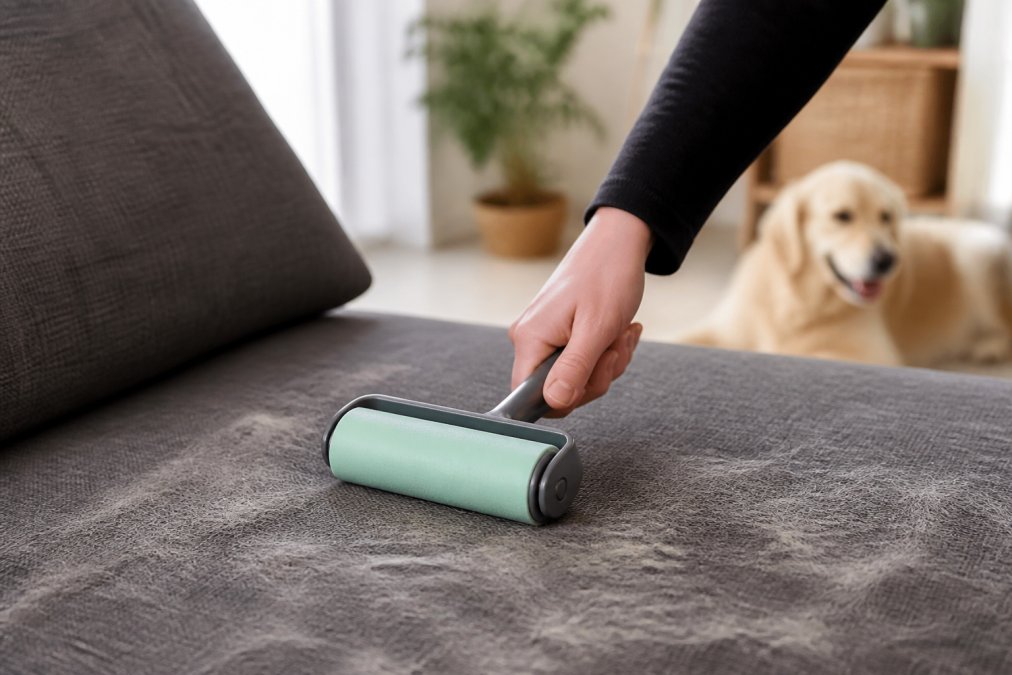
The Ace 2 Ace Pet Hair Remover Roller stands out for its self-cleaning mechanism. A single button press pushes collected hair into an internal chamber, which means you never touch the fur. It handles velvet and wool without damage, though very fine, short hair can slip past its bristles. For tougher jobs, the Uproot Cleaner Pro uses a metal edge to scrape embedded hair from thick fabric. Its reusable design eliminates recurring costs, but the aggressive edge is not suitable for delicate materials.
A cheaper daily option is the Black+Decker Pet Hair Remover Roller, which uses an adhesive-free static surface. It is ideal for quick passes over cushions and pet beds, and the waste compartment opens easily for emptying. For households with multiple pets, keep one roller beside the sofa and one near the door for last-minute clothing checks.
How to Remove Dog Hair from Carpet: Step-by-Step Methods
Removing dog hair from carpet requires a two-pass approach: first loosen the embedded hair, then vacuum it away. Skipping the first step is the most common mistake, and it leaves the undercoat matted at the carpet base where vacuums cannot reach.
Start by working a manual scraper across the carpet in one direction. The Uproot Cleaner Pro excels here, its metal edge dragging hair to the surface in visible clumps. Collect these clumps by hand or with a dustpan before they scatter.
Next, vacuum slowly and in overlapping lines. Fast, haphazard passes simply blow hair around. On deep-pile carpets, use a vacuum with a tangle-free brush roll, such as the Hoover WindTunnel Tangle Guard, which prevents hair from wrapping around the bar and maintains suction over time.
Finish with a damp microfibre cloth wiped across the surface. This picks up the fine, broken hairs that tools miss and leaves the carpet looking refreshed. For car interiors and tight corners, the Analan Pet Hair Remover's triangular silicone head reaches crevices that full-size tools cannot access, though its small surface area makes it slow for large rugs.
Choosing the Right Vacuum for Pet Hair on Floors and Upholstery
The right vacuum for pet hair depends on your flooring mix and whether the machine must also handle upholstery. Cordless stick vacuums suit hard floors and quick daily passes, while upright models generally deliver stronger suction on deep carpets.
For homes with heavy shedding, some cordless options offer features like laser heads to reveal dust and anti-tangle tools for upholstery. Advanced filtration can also capture pet dander, which may benefit allergy sufferers.
For carpet-heavy homes, the Bissell Pet Hair Eraser Turbo Plus offers specialised tools in the box, including a Pet TurboEraser for stairs. It is bulkier to store than a cordless model, yet the tangle-free brush roll and easy-empty dirt bin justify the space. The Hoover WindTunnel Tangle Guard provides a strong mid-range alternative, though its weight makes it less convenient for multi-storey cleaning.
Pet Hair Prevention Tips: Stop the Problem Before It Starts
Pet hair prevention tips focus on removing loose fur from the animal before it lands on your furniture. Grooming twice weekly with a deshedding tool cuts loose undercoat dramatically, and it distributes natural oils that keep the coat healthy.
A grooming glove such as the Salhap Pet Hair Removal Glove serves double duty. Its silicone tips massage the pet while collecting fur, making the process feel like a stroke rather than a chore. Dogs and cats tolerate it far better than a metal comb, which means you will actually do it consistently.
Wash pet bedding weekly in hot water. Bedding traps the majority of shed hair, and regular washing prevents it from migrating to your sofa and carpets. Use a lint brush like the Lilly Brush Be Forever Furless on clothing before washing, so hair does not coat the inside of your machine.
Conclusion: Your Monthly Routine for Managing Pet Hair
Managing pet hair effectively is a weekly rhythm, not a one-off deep clean. Set aside ten minutes daily for sofa rollers and quick vacuum passes, and schedule a longer grooming and carpet session once a week. Prevention through regular brushing cuts the cleaning workload more than any single tool.
We curate practical pet care gadgets that simplify these routines, from 2-in-1 walking solutions to grooming aids designed for busy owners. Our range focuses on tools that genuinely save time rather than gimmicks that gather dust. Add a purpose-built pet hair tool to your home and see the difference a proper strategy makes.
Frequently Asked Questions
What is the most effective tool for removing pet hair from upholstery?
For upholstery, a reusable fabric roller with a self-cleaning base is often the most effective choice. Unlike sticky tape rollers, these tools use static or micro-bristle surfaces to grab hair without wasting sheets. Manual scrapers with a metal or firm edge also work well on sofas, but test them on an inconspicuous area first to avoid damaging delicate fabric. Keep one roller near your main seating area so you can do a quick pass daily.
How do I get dog hair out of carpets without a vacuum?
A rubber or silicone brush is your best option without a vacuum. The rubber creates static that pulls hair from the carpet fibres. Work in one direction, then sweep the collected hair into a pile. For deeply embedded hair, use a manual carpet scraper with a metal edge, pulling it towards you in firm strokes. Dampening a rubber glove and running your hand over the carpet also lifts surface hair effectively in a pinch.
Do rubber brushes really work for pet hair?
Yes, rubber brushes work well because the material generates static electricity, which attracts pet hair. They are particularly effective on carpets and rugs where hair embeds itself deep in the fibres. Rubber brushes are reusable and easy to clean, making them a cost-effective alternative to disposable rollers. However, they require more manual effort than a vacuum, so they suit smaller areas, car interiors, and quick touch-ups between thorough cleans.
How can I prevent pet hair from building up in my home?
Regular grooming is the most effective prevention method. Brush your pet outdoors or in an easily cleanable area at least twice a week to remove loose fur before it falls onto your floors. Wash pet bedding weekly and use a lint roller on cushions and curtains. Vacuum high-traffic areas frequently and consider washable throws on sofas, which are easier to clean than the upholstery underneath.


