
Table of Contents
- Why Most Household Gadgets Disappoint (And How to Spot Quality)
- The 5-Point Framework for Assessing Any Gadget
- Time Saving Gadgets for Busy Professionals: What Actually Works
- How to Declutter Home Gadgets Without Wasting Money
- Evaluating Household Gadget Reviews: Separating Signal from Noise
- Real-World Examples: Quality Household Gadgets Worth Buying
- Common Mistakes When Buying Quality Household Gadgets
- Conclusion
- Frequently Asked Questions
Last Updated: 20 September 2026
Why Most Household Gadgets Disappoint (And How to Spot Quality)
Most household gadgets fail for a boring reason: they were bought to solve a problem nobody properly defined. Learning how to choose quality household gadgets starts with one shift in thinking. You are not shopping for features. You are shopping for the two or three specifications that decide whether the thing still works in eighteen months.
That distinction matters more than ever. The average home now holds dozens of small powered devices, and the gap between a well-made one and a cheap one is rarely visible in a product photo. At Cooperrite.com, we select household products across kitchen, wellness and pet care categories.
Here is the good news. Quality is testable before you spend a penny, using specifications, warranty terms and repair routes you can check in minutes. Below, we break down a five-point framework, the mistakes that cost people the most money, and the categories where paying more genuinely pays off.
The 5-Point Framework for Assessing Any Gadget
A gadget is worth buying when it scores well on materials, repairability, warranty, power supply and parts availability. Those five checks take about ten minutes online.
Work through them in order:
| Check | What to Look For | Red Flag |
|---|---|---|
| Materials | Metal fixings, thick ABS, replaceable seals | Thin plastic, glued seams |
| Repairability | Screws not clips, spare parts sold | Fully sealed units |
| Warranty | 2+ years, parts and labour | 12 months, labour excluded |
| Power | Standard adapters, USB-C | Proprietary chargers |
| Parts | Filters, blades, pads available | No spares listed |
The framework matters because it forces you to judge the product, not the marketing. A blender with a two-year warranty and stocked spare blades is a better bet than one with a longer feature list and no route to repair.
Materials and Build: What to Check Before You Buy
Build quality is the single strongest predictor of how long a gadget lasts. Look for metal threads on anything that screws together, silicone rather than hard plastic on charging pads, and housings that feel dense rather than hollow.
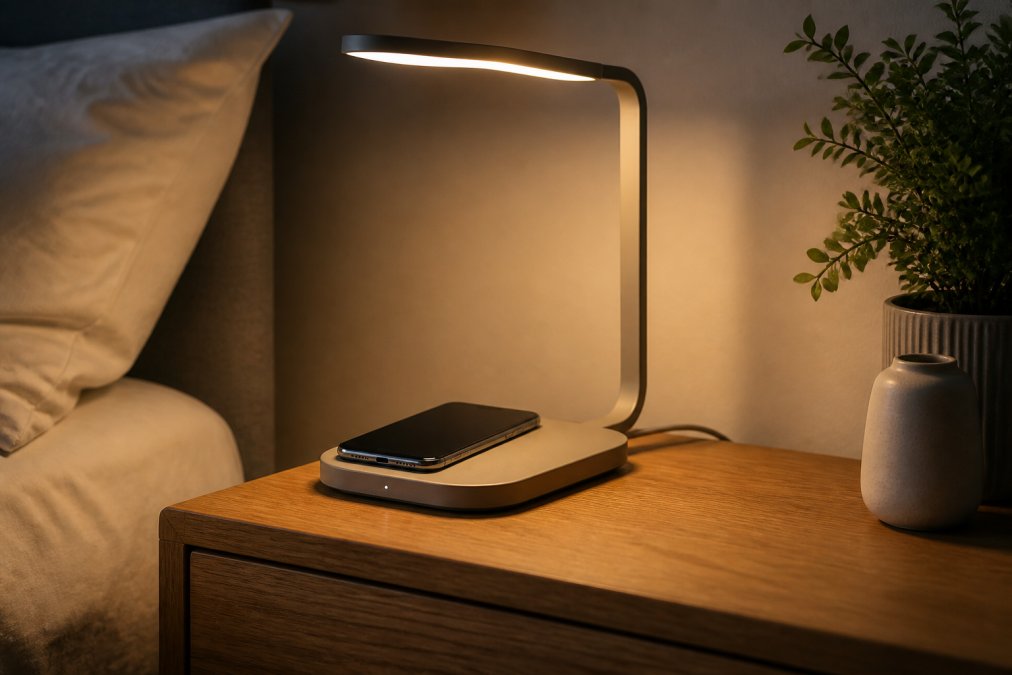
A common mistake is judging by weight alone. Weight signals density, but cheap devices sometimes add ballast to feel substantial. Instead, read the specification list for the actual material, as you would with a product like the LED Bedside Lamp with Wireless Phone Charger, which lists an ABS body with a silicone charging pad. That level of material disclosure is itself a quality signal: manufacturers who hide materials usually have a reason.

Repairability and Warranty: The Hidden Value Test
Repairability and warranty terms together tell you what the manufacturer expects to happen when the product breaks. A long warranty with stocked spare parts signals confidence. A short warranty on a sealed unit signals the opposite.
Under the Consumer Rights Act 2015, goods must be of satisfactory quality, fit for purpose and as described, and you have a legal right to a remedy if they are not. The official guidance on the Consumer Rights Act sets out how that applies to faulty goods and repairs. That statutory protection sits alongside any manufacturer warranty, so a weak warranty is not the end of your rights, but a strong one shows the maker stands behind the build.
Time Saving Gadgets for Busy Professionals: What Actually Works
Time saving gadgets for busy professionals earn their place only when they remove a daily task rather than adding a setup ritual. The best ones consolidate functions you already perform and need no app, no subscription and no learning curve.
That rules out a surprising number of products.
How to Declutter Home Gadgets Without Wasting Money
Decluttering home gadgets is not about owning fewer things. It is about removing the devices that create work instead of absorbing it. Most homes do not have a storage problem, they have a duplication problem.
- Has it been used in the last six months?
- Does it duplicate something else you own?
- Could you replace it with one better-made item?
Evaluating Household Gadget Reviews: Separating Signal from Noise
Evaluating household gadget reviews means ignoring the star average and reading for specifics. A useful review names the material, the failure point and how long the product lasted. A useless one says "great value" and nothing else.
Real-World Examples: Quality Household Gadgets Worth Buying
Quality household gadgets worth buying share a profile: they replace at least two lesser items, they list their materials openly, and they come with a clear power specification. Three categories consistently meet that bar.
Common Mistakes When Buying Quality Household Gadgets
The most expensive mistake is buying on discount rather than specification. A reduced price on a poorly made gadget is not a saving, it is a delayed cost, because you will replace it sooner and pay twice.
Three others come up again and again:
- Ignoring the power supply. A proprietary charger means the product is scrap the moment the cable fails. Standard adapters and USB-C keep it usable for years.
- Trusting the feature count. Twenty settings you never use are worth less than three that work reliably. Complexity also means more to break.
- Skipping the spare parts check. If filters, pads or blades are not sold separately, the product has a fixed lifespan set by its shortest-lived component.
Conclusion
Choosing well is a skill, and it comes down to reading specifications instead of marketing. Check the materials, confirm the warranty, verify the power supply, and make sure spare parts exist. Do that and most disappointing purchases disappear before they happen.
Frequently Asked Questions
How do I know if a household gadget is worth the money?
Work out the cost per use. A £59.99 LED bedside lamp with a built-in 15W wireless charger replaces two separate items and gets used every night, so the daily cost drops fast. Compare that to a single-purpose gadget you use twice a year. Check the materials, warranty length, and whether it solves a problem you actually have. If you cannot name three times you will use it in the next month, it is not worth buying.
What should I look for when buying smart home devices?
Focus on compatibility, app reliability, and whether the smart features add real convenience. For example, a lamp with app-controlled brightness and alarms must work with your phone's operating system and connect without a hub. Check whether the app gets regular updates and whether the device works manually if the Wi-Fi drops. A smart gadget that becomes useless without a connection is a liability, not an upgrade.
How can I avoid buying gadgets that just end up as clutter?
Apply the one-in-one-out rule and buy only for problems you face weekly. Before purchasing, ask whether the gadget replaces something you already own or adds a new function you will use. A digital measuring tape with five modes replaces a standard tape and covers curved surfaces a normal one cannot, so it earns its drawer space. If a gadget duplicates what you have or needs accessories to work, skip it.
Are expensive kitchen gadgets always better quality?
No. Price reflects brand positioning as much as build quality. A £14.99 LCD calculator with a built-in notepad can be more useful for home admin than a £60 single-function device. Look at materials, warranty terms, and whether spare parts are available. A higher price is only justified when it buys better components, a longer guarantee, or a feature you will genuinely use. Otherwise you are paying for packaging.
What are the signs of a high-quality household appliance?
Consistent materials, clear specifications, and a warranty that covers real faults. Check that the product listing states exact materials (such as ABS plastic with a silicone pad) rather than vague claims. Look for UK plug compatibility, repairable parts, and a brand that answers questions before you buy. If a listing avoids specifics or uses only lifestyle photos with no product detail shots, treat that as a warning sign.
How do I check the reliability of a new home gadget brand?
Read reviews across multiple platforms, not just the brand's own site. Look for reviews that mention how the product performs after three to six months, not just unboxing day. Check whether the brand responds to negative reviews with solutions. Verify the returns policy and warranty length. A brand selling a £64.99 Shiatsu massager with a clear AC adapter specification and responsive support is easier to trust than one with no contact details.
Do time saving gadgets for busy professionals actually save time?
They save time when they remove a repeated task, not when they add a new one. A Shiatsu neck and shoulder massager with heat and three speed levels gives you a 15-minute tension relief session at home instead of booking and travelling to an appointment. A 2-in-1 calculator and notepad keeps figures and notes on one surface. The test is simple: does the gadget cut steps from your routine, or add them?
Most homes accumulate gadgets that promise convenience and deliver clutter. Cooperrite.com curates household products that actually remove work: a bedside lamp that charges your phone, a Shiatsu massager with a standard UK adapter, and a digital measuring tape that reads curved surfaces accurately. Each one is chosen for build quality, repairability and clear specifications rather than feature count. Get started with Cooperrite.com and build a home where every gadget earns its place.


