
Table of Contents
- Why Simple Home Gadgets Can Improve Your Sleep
- Best White Noise Machines for Sleep
- Smart Light Bulbs for Circadian Rhythm
- How to Create a Sleep-Friendly Bedroom Environment
- Comfort Gadgets That Help You Sleep
- What to Look For When Choosing a Sleep Gadget
- Conclusion
- Frequently Asked Questions
Last Updated: September 26, 2026
Why Simple Home Gadgets Can Improve Your Sleep
Most sleep advice asks you to overhaul your life. Simple home gadgets for better sleep take a different approach: small, low-effort changes to your bedroom that make falling asleep easier. Temperature, light and physical comfort drive how quickly you drift off, and each can be adjusted with a single purchase.
This guide from Cooperrite.com covers the gadgets worth buying, what to avoid, and how to judge a product before it ends up in a drawer.
The logic is straightforward. A cool, dark, quiet room tells your body it is safe to wind down. A warm, bright, noisy one does the opposite. Gadgets that fix those conditions work quietly in the background while you get on with your evening.
What most buyers get wrong is treating sleep gadgets as a collection. One or two good ones beat five mediocre ones. The sections below show which categories deliver, and how to spot the ones that will not.
Best White Noise Machines for Sleep
A white noise machine plays steady, neutral sound that masks disruptive noises. For people living near busy roads, thin walls or early-rising neighbours, that masking effect is the whole point.
Look for a machine with a genuine fan or a high-quality speaker, not a cheap looping track. Loops announce themselves. A fan-based unit produces sound that never repeats, so your brain stops noticing it within minutes.
Features that matter:
- Adjustable volume with a low minimum, so quiet masking is possible
- Continuous playback without a sleep timer that cuts out at 3am
- A warm, low tone rather than a thin, hissy one
- Mains power, since battery units fade as they drain
Where they fall short: white noise does nothing for light or temperature, and some people find any steady sound distracting. If silence works for you, spend the money elsewhere.
Smart Light Bulbs for Circadian Rhythm
Smart light bulbs for circadian rhythm control the colour and brightness of your bedroom lighting through the evening. The goal is to reduce blue-rich light after sunset, which helps your body start producing melatonin at the right time.
In practice, this means one bulb or lamp that shifts from bright daylight tones in the morning to warm amber tones at night. A scheduled dimming routine is more useful than manual control, because you will not remember to adjust it.
Setup is simple. Screw in the bulb, connect it to your phone, then set two rules: full brightness until early evening, then warm and dim until bedtime. Ten minutes of configuration, then it runs itself.
The honest limitation is that a smart bulb cannot fix a bright overhead light you leave on. It works best as the main light source in the hour before bed, not as an addition to a room already flooded with light.
How to Create a Sleep-Friendly Bedroom Environment
A sleep-friendly bedroom environment is cool, dark, quiet and free of clutter. Those four conditions matter more than any single gadget, and gadgets only help when they support them.
Work through this checklist before buying anything:
- Set the thermostat so the room sits slightly cool overnight
- Fit blackout curtains or a well-fitted blind to block street light
- Move chargers and screens away from the bed
- Choose one sound source: a white noise machine or earplugs, not both
- Keep the bed for sleep only, so your brain links it to rest
- Clear surfaces so the room reads as calm rather than busy
If you do only one thing, fix the light. It is the cheapest change and the one most people overlook.
Comfort Gadgets That Help You Sleep
Physical discomfort keeps more people awake than noise or light. Comfort gadgets address the aches that build through the day and follow you to bed, which is where a targeted product beats a general one.
The Sleep Therapy Pillow (£59.99) is the strongest starting point. Its contoured U shape cradles the body, and the hourglass curve supports the back while aligning the hips. The listing notes that 9 out of 10 customers reported a better night's sleep. It works in multiple positions, so side and back sleepers can both use it.

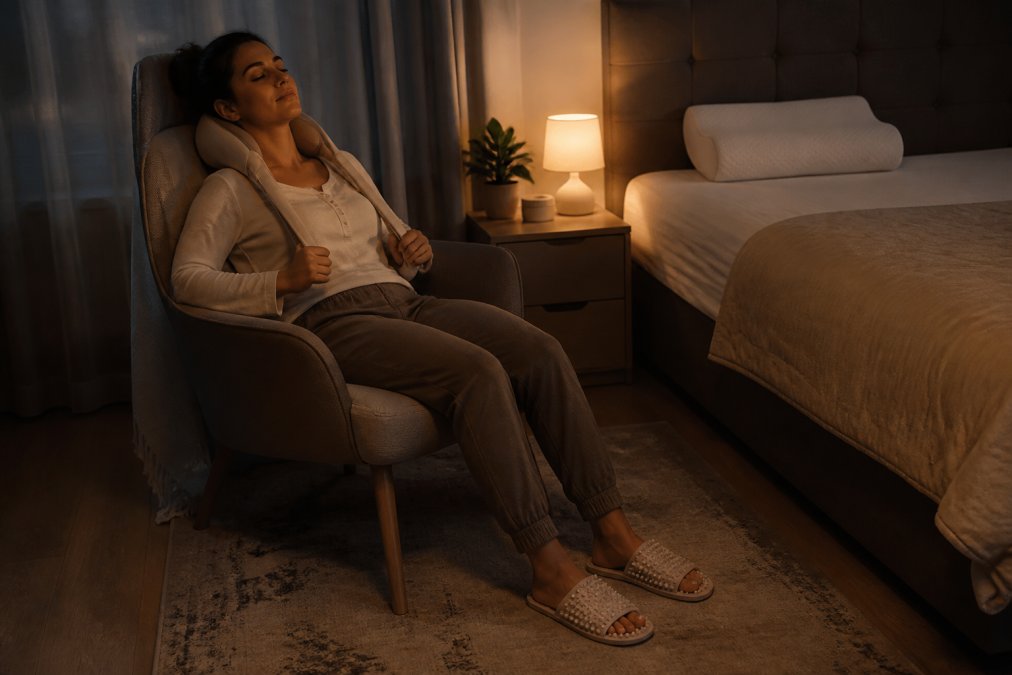
For tension that starts in the shoulders, the Neck and Shoulder Massager (£64.99) uses eight deep-kneading Shiatsu heated rollers with clockwise or anti-clockwise movement and three speed levels. It suits anyone who sits at a desk for hours or trains hard. Use it in the evening, not in bed.
The SmartCup (£24.99) combines cupping therapy with red light and heat, using timed suction and adjustable heat modes. It is compact and rechargeable, and a full charge gives seven days of use. Best for tight, knotted muscles rather than general relaxation.
Finally, the Acupressure Slippers (£39.99) target pressure points to promote relaxation and ease stress. Changeable knobs let you adjust the pressure, and velcro straps fit all foot sizes. They also help strengthen the muscles used for good posture. Wear them for twenty minutes before bed.
| Gadget | Price | Best For | Standout Feature |
|---|---|---|---|
| Sleep Therapy Pillow | £59.99 | Back and hip support | Contoured U shape |
| Neck and Shoulder Massager | £64.99 | Desk-related tension | 8 heated Shiatsu rollers |
| SmartCup | £24.99 | Knots and tight muscles | Cupping with red light and heat |
| Acupressure Slippers | £39.99 | Stress and posture | Adjustable pressure knobs |
What to Look For When Choosing a Sleep Gadget
Buy for the problem you actually have. If noise wakes you, buy a white noise machine. If your back aches, buy a pillow. Buying a gadget for a problem you do not have is how these products end up unused.
Four criteria do most of the work:
- Fit with your routine. A gadget you have to assemble or charge daily will not survive the first week.
- Setup time. Anything needing more than ten minutes of configuration is a commitment, not a convenience.
- Storage. In a small bedroom, a bulky item that lives on the floor is a problem, not a solution.
- Build and materials. Leather, solid housings and replaceable parts last. Thin plastic does not.
Conclusion
The gap between a restless night and a decent one is often one small change, not a new bedroom. Fix the light, quiet the noise, and support the body, and most people notice the difference within a week.
Cooperrite.com stocks the comfort side of that list: the Sleep Therapy Pillow for back and hip support, the Neck and Shoulder Massager for desk-related tension, the SmartCup for tight muscles, and the Acupressure Slippers for evening wind-down. Each one is chosen to solve a specific problem rather than fill a shelf.

Start with the single gadget that matches your worst sleep complaint. Add it to your routine, give it a fortnight, then decide what comes next.
Frequently Asked Questions
Do sleep gadgets actually help you sleep better?
They can, but it depends on the gadget and your specific sleep issue. For example, white noise machines mask disruptive sounds, while smart light bulbs help regulate your circadian rhythm by adjusting light exposure. Comfort gadgets like the Sleep Therapy Pillow (£59.99) support your body to reduce aches that interrupt sleep. No gadget replaces good sleep habits, but the right tool can remove a specific barrier.
What is the best simple gadget for falling asleep faster?
A white noise machine is often the simplest starting point because it blocks background noise without requiring any setup beyond turning it on. If tension or muscle aches keep you awake, a neck and shoulder massager (£64.99) with heated rollers can relax tight muscles before bed. For racing thoughts, acupressure slippers (£39.99) target pressure points to promote relaxation. The best one is whichever addresses your main sleep disruptor.
How can I improve my sleep environment at home?
Start with light: use smart bulbs that dim and shift to warmer tones in the evening. Next, address sound with a white noise machine or earplugs. Keep your bedroom cool, ideally between 16°C and 18°C. Invest in a supportive pillow like the Sleep Therapy Pillow (£59.99) if you wake with aches. Finally, remove screens and clutter. Small changes to light, sound, and comfort make the biggest difference.
Are white noise machines effective for sleep?
Yes, for many people. White noise machines work by producing a consistent sound that masks sudden noises like traffic or neighbours. This helps you stay asleep rather than being woken by spikes in noise. They are particularly useful if you live in a noisy area or share a wall with others.
Can smart lighting improve my circadian rhythm?
Smart bulbs can support your circadian rhythm by mimicking natural light patterns. In the morning, bright cool-toned light helps you wake up. In the evening, warm dim light signals your body to produce melatonin. Program your bulbs to shift automatically. This gradual transition helps regulate your sleep-wake cycle, especially if you spend most of your day indoors under artificial light.


