
Table of Contents
- Why Smart Pet Accessory Storage Saves You Time Every Day
- Pet Supply Storage Ideas That Work in Any Home
- Creating a Pet Hub at Home: A Step-by-Step Plan
- Best Containers for Pet Food Storage (and How to Choose)
- How to Organise Pet Accessories in a Small Flat
- Common Mistakes to Avoid When Organising Pet Gear
- Frequently Asked Questions
Last Updated: September 30, 2026
Why Smart Pet Accessory Storage Saves You Time Every Day
Most pet owners lose ten minutes a day hunting for a lead, a brush or the right food scoop. That adds up to over 60 hours a year. Smart ways to organise pet accessories fix this by giving every item a fixed home, so you grab and go instead of searching.
This guide covers storage ideas, a step-by-step pet hub plan, and the best containers for pet food storage. The core argument is simple: you do not need more space, you need a better system.
The RSPCA pet care advice makes the same point about routine. Pets thrive on consistency, and so do the humans who care for them. A predictable storage setup supports both.
Pet Supply Storage Ideas That Work in Any Home
Good pet supply storage ideas start with one rule: store items where you use them. A lead lives by the door. Grooming tools live near the sofa or bathroom. Food lives near the bowl.
Use Vertical Space and Over-Door Racks
Wall space is free storage you are not using. Hang a hook rail by the front door for leads and harnesses. Fit an over-door rack on a cupboard for brushes, poo bags and small toys. A shoe organiser on the back of a door holds up to a dozen small items. This works well in rented homes because nothing is drilled in.
Repurpose Baskets, Bins and Trolleys
A rolling trolley is the most flexible option. Load it with food, bowls, treats and toys, then wheel it to wherever you need it. Baskets work for toys. Deep bins work for bulky items like beds and blankets. The trick is matching the container to the item, not the other way round.
Creating a Pet Hub at Home: A Step-by-Step Plan
Creating a pet hub at home means building one central station for everything your pet needs daily. A good hub takes about 30 minutes to set up and removes the need to search multiple rooms.
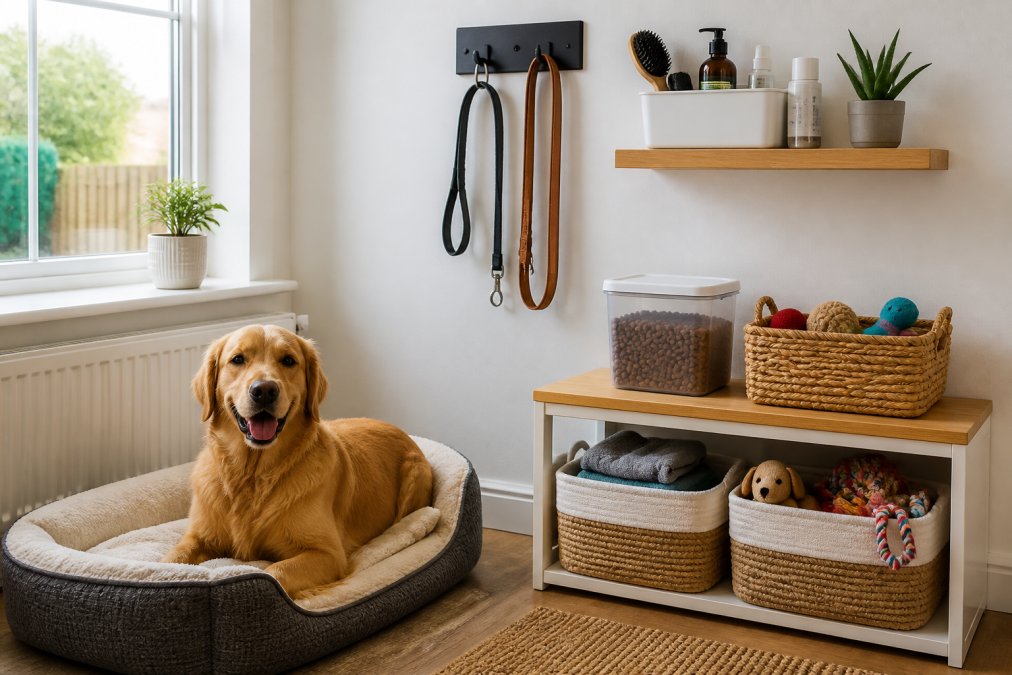
Step 1: Choose the Right Spot
Pick a spot near where your pet eats and sleeps, ideally close to a door. It needs a power socket if you use any gadgets, and enough floor space for a container and a bed. A hallway corner or utility room usually works best.
Step 2: Group Items by Daily Use
Split everything into three groups:
- Daily: food, bowls, lead, poo bags, medication
- Weekly: grooming brush, nail clippers, toys on rotation
- Occasional: travel crate, spare bedding, seasonal coats
Daily items go at arm's reach. Weekly items go on a shelf. Occasional items go up high or in a cupboard.
Step 3: Label and Contain Everything
Label every container with a marker or printed tag. Labels stop the slow drift where items end up in random drawers. Clear containers work best because you can see what is inside without opening them.
Best Containers for Pet Food Storage (and How to Choose)
The best containers for pet food storage keep food fresh, keep pests out, and are easy to scoop from. The right choice depends on your pet's food type and how much you buy at once.
Airtight vs Ventilated: What Your Pet Food Needs
Dry food needs an airtight container. Air and moisture make kibble go stale and lose its crunch. A clip-lock lid with a rubber seal does the job. Fresh or raw food needs the opposite: a ventilated container in the fridge so air can circulate and condensation does not build up.
Sizes and Materials That Last
Match the container size to your buying habit. A 5 kg bag of dry food needs roughly a 10 litre container with room to scoop. Materials that last are food-grade plastic, stainless steel and thick glass. Thin plastic cracks at the hinge within a year.
| Container Type | Best For | Key Feature | Watch Out For |
|---|---|---|---|
| Airtight clip-lock | Dry kibble | Rubber seal | Seal wears over time |
| Ventilated fridge box | Fresh and raw food | Airflow gaps | Not for dry food |
| Rolling trolley bin | Multi-pet homes | Wheels and handle | Takes floor space |
| Stainless steel canister | Small portions | Easy to clean | Can dent |
How to Organise Pet Accessories in a Small Flat
Small spaces need vertical thinking and hidden storage. A flat with no utility room still has doors, walls and the space under furniture.
Start with these moves:
- Use over-door racks for leads and bags
- Slide a shallow bin under the bed for spare bedding
- Mount a shelf above the food bowl for treats and medication
- Use a rolling trolley that tucks into a corner when not in use
- Keep only daily items out, and store the rest out of sight
The Blue Cross advice on pet-friendly homes notes that pets need a quiet space of their own. A tidy hub with a bed nearby gives them that without cluttering your living area.
Common Mistakes to Avoid When Organising Pet Gear
Most storage setups fail for the same handful of reasons. Fix these and the system holds.
- Buying containers before sorting. You end up with boxes that do not fit anything.
- Storing food in the bag. Air gets in and the food goes stale faster.
- Putting daily items out of reach. If the lead is upstairs, you will leave it there.
- Skipping labels. Unlabelled bins become junk drawers within a month.
- Ignoring the pet's routine. A hub far from the feeding spot gets abandoned.
- Overfilling containers. You need scoop room, not a packed box.
Frequently Asked Questions
How do I store dog toys in the living room without them taking over?
Use a dedicated basket or fabric bin that matches your decor and keep it in one corner. Rotate toys weekly so only a few are out at a time, storing the rest in a lidded box. A shallow tray under a side table works well for balls and chews. The aim is one visible container, not toys scattered across the floor.
What are the best containers for pet food storage?
Choose an airtight container with a secure lid to keep food fresh and stop smells escaping. Look for food-grade plastic or stainless steel, a size that holds roughly two to four weeks of food, and a wide opening for easy scooping. Clear containers help you see when supplies are running low. Always keep the original packaging or note the batch and best-before date.
How can I create a dedicated pet station at home if I have very little space?
Creating a pet hub at home in a small flat means going vertical. Use an over-door rack for leads and harnesses, a slim trolley for food and bowls, and stackable boxes for grooming kit. A single cupboard shelf can hold everything if you group items by daily use and label each container. The key is one fixed spot so nothing gets lost.
Are there stylish ways to hide pet gear in a shared living space?
Yes. Choose storage that doubles as furniture, such as a bench with hidden compartments, a lidded ottoman for toys, or a sideboard with baskets inside. Neutral colours and natural materials blend into the room. Keep leads on a decorative hook behind the door and use a lidded bin for food. This keeps pet supply storage ideas practical without making your home look like a pet shop.
Pet owners juggle work, pets and a home that never quite stays tidy. A proper storage system cuts the daily friction, and that is exactly what Cooperrite.com builds products for. Our range includes 2-in-1 pet walking solutions that combine lead and bag holder in one tool, digital measurement tools for portioning food, and flexible organisers designed to fit small spaces. Get started with Cooperrite.com and turn a chaotic corner into a pet hub that works every day.


